Showing posts with label creativity. Show all posts

Thursday, December 8, 2016

Regenerative Design Education: Living Praxis with a Friendly Universe


Monday, December 30, 2013

Incubating Social Creativity and Regenerative Creativity

T. Fisher photo of Stancell's Mural "We Who Believe in Freedom Cannot Rest"
The fields of social learning and social incubators are cultivating, I would suggest, the endeavor of incubating social creativity.

Social Learning. Wals and Leij (2007) in their prefatory remarks to a book on the topic of social learning and sustainability education (free downloadable ebook available) point out the spectrum of meaning for social learning --  from learning among deeply socially contexted inviduals to focusing on the learning processes of 'social aggregates' (pp. 19-20). They suggest that social learning involves facilitating dynamic contexts for richly socially contexted, diverse groups to engage with sustainability challenges along this spectrum. Complexivists have referred to this as extending the locus of learning to the learning community [and not (only) the individual] (Davis & Sumara, 2006) or as the learning of collective beings (Minati & Pessa, 2006). Sterling (in the 2007 volume linked above) imagines a "connective cultural consciousness" in which sustainability social learning can help cultures "ride the storm" of climate change by undertaking radical social learning at the scale of paradigm change.

Granted, these ideas of social collectives are not actually novel. To note, elder cultures (such as those featured by Bowers' scholarship on the learning commons and traditional cultures) have long understood that learning communities offer a deep connection, empowerment, and nurture than individuals operating in isolation or even individuals collaborating.  Educational theory is still catching up.

At the same time that learning theory is learning to jump scales and study aggregates, enterprise theory and incubation of entrepreneurship (and ecopreneurship even) is undergoing a similar shift from rugged individualism to .... social incubators.


Social Incubators. Social media, crowdfunding, honoring social good and values-infused endeavor, and open-sourcing as well as increasingly accessible organizational infrastructure through internet technologies have radically opened the field of enterprise innovation. The idea of separate "enterprises" are themselves melting as densely interconnected networks of creatives and service brocades transfigure entrepreneurship. The rise of social enterprise incubators (also these examples) and the generosity economy all reflect a parallel to the shift described in educational theorizing toward attending to the social dimensions of learning and social learning. 


Incubating Social Creativity. Without falling into the western tendency to reify the new (as is often the case in unconscious neophilia), the social evolution of our species involves attending to complex emergence. Our culture is evolving to attend to emergence, autopoiesis, and self-organization as signs of complex innovation and novelty.  Goldstein, Hazy, and Lichtenstein (2010) propose complexity-informed strategies for facilitating ecologies of innovation. 

Attending to innovation in a deep sense means attending to creativity. Csiksentmilhalyi (1999) noticed how the systems of field and culture contexted and vetted individual creativity. R. Keith Sawyer (2010) takes off from jazz improvisation to develop a complexity-informed social creativity called collaborative emergence. In collaborative emergence, creative collaborations by groups of people spark emergent phenomena at the group scale. Ecologies of innovation extend this emergent process to locality and cultural scales, even innovating public services (for example in Peterborough). At the scale of locality and neighborhood, the Transition Town movement exemplifies this shift; City Repair and Placemaking serves as another beacon. Social creativity has been credited with rapidly accelerating software innovation (Granof, 2013). Many other theorists have also explored social creativity (including John-Steiner, 2000 and Sawyer, 2008). Social as a descriptor in social creativity can function in two ways, either to convey that the phenomena is generated by social aggregate or that it is geared toward social good.

Researching Incubating Social Creativity. My original mixed methods research is surfacing methods and means for catalyzing social creativity. I research the "social" in creativity across both dimensions of meaning of social: (1) that it is generated by groups and systems of creativity and (2) that it has an intention toward social good, in this case sustainability and regeneration.

I am studying how to incubate multi-scale creativity. By generating processes, habits of curiosity, and cultures of individual and small group creative processes as well as setting up learning cultures favoring social creativity, we can facilitate and encourage the underlying practices, habits, and cultural matrix to nurture social creativity.

The research is surfacing how creativity, the seedbed for innovation and personal and cultural flourishing, can be sourced in nature and bioculture and aligned with increasing the integrity of culture, place and planet. This regenerative creativity emerges at multiple scales and produces empathy, connection, and earth-aligned action. Incubating social creativity catalyzed by ecofractal patterns from nature and bioculture develops what Bowers (2012) calls ecological intelligence and what Goleman, Bennett & Barlow (2012) name ecoliteracy, an emotionally and socially engaged ecological intelligence.  I would suggest that to incubate this kind of regenerative cultural and social creativity can source shifts not only in social learning and social enterprise, but also in multiple other domains and transdisciplines as part of the enlarging and interconnecting tapestry of cultural regeneration beyond sustainability to thriving.

In the coming months we will be sharing snapshots of the emergent findings from this research.

Resources
  • Bowers, C. A. (2012). The challenge facing educational reformers: Making the transition from individual to ecological intelligence in an era of climate change. In D. Ambrose & R. J. Sternberg (Eds.), How dogmatic beliefs harm creativity and higher-level thinking (pp. 112-122). New York, NY: Routledge, Taylor & Francis.
  • City Repair. (2013). Website. Retrieved from http://www.cityrepair.org
  • Csikszentmihalyi, M. (1999). Implications of a systems perspective for the study of creativity. In R. J. Sternberg (Ed.), Handbook of creativity. New York, NY:
    Cambridge University Press.
  • Dawson, J. (2012). Building an economy on gift and generosity [Blog post]. Retrieved from http://www.schumachercollege.org.uk/blog/building-an-economy-on-gift-and-generosity-jonatha-dawson
  • Goldstein, J., Hazy, J. K., & Lichtenstein, B. B. (2010). Complexity and the nexus of leadership: Leveraging nonlinear science to create ecologies of innovation. New York, NY: Palgrave Macmillan.
  • Goleman, D., Bennett, L., & Barlow, Z. (2012). Ecoliterate: How educators are cultivating emotional, social, and ecological intelligence. San Francisco, CA: Jossey-Bass and the Center for Ecoliteracy.
  • Granof, P. (2013, October 9). Social creativity: The engine of software development [Blog post]. Wired - Innovation Insights. Retrieved from http://www.wired.com/insights/2013/10/social-creativity-the-engine-of-software-development-in-the-social-era/
  • Sawyer, R. K. (2008). Group genius: The creative power of collaboration. New York, NY: Basic. 
  • Sawyer, R. K. (2010). Individual and group creativity. In J. C. Kaufman & R. J. Sternberg (Eds.), The Cambridge handbook of creativity (pp. 366-380). New York, NY: Cambridge University Press.
  • Stancell, P. Mural of "We who believe in freedom cannot rest." On Wikimedia Commons. Mural on the wall of row houses in Philadelphia, sponsored by the Freedom School Mural Arts Program.
  • Transition Network. (2013). Website.  Retrieved from http://www.transitionnetwork.org/
  • Wals, A. E. J. (Ed.). (2007). Social learning towards a sustainable world: Principles, perspectives, and praxis. Pays-Bas: Wageningen Academic Publishers. Retrieved from the publisher at http://www.wageningenacademic.com/sociallearning 
Image Credit: 

Photograph by Tom Fischer, 2009, of a Mural on the wall of row houses in Philadelphia. Mural Artist is Parris Stancell, sponsored by the Freedom School Mural Arts program. Photo Creative Commons 2. Left to right: Malcolm Shabazz (Malcolm X), Ella Baker, Martin Luther King, Jr., Frederick Douglass. The quote above the mural is from Ella Baker, a founder of SNCC (Student Non-Violent Coordinating Committee), a civil rights group that helped to coordinate "Freedom Rides" in the early 1960's (from Wikimedia Commons).

Tuesday, July 23, 2013

Complexity Conference to Include Everyday Creativity Scholar Ruth Richards

Creativity research has pivoted away from the "lone genius myth" (in the words of Montuori and Parser, 1995) and is moving towards what scholar Ruth Richards terms everyday creativity (Psychology Today article linked here provides background).

Saybrook creativity professor Ruth Richards will be the Friday keynote at the Society for Chaos Theory in Psychology and the Life Sciences 23rd Annual International Conference this July 25-27 at Portland State University.


Program available here:
http://www.societyforchaostheory.org/conf/2013/

An excerpt from Everyday Creativity highlights how we can miss the stunning beauty all around us.
We create the sight even as we become conscious of it. We do not simply see it. In our daily lives, who or what is doing the selecting? And why? Is this predetermined? Can we -- in the here and now – make a change?  Can we see further?  Can we see better?  Can we  even better our world? - Ruth Richards
Ruth Richards has also studied fractals and creativity as well as her research on everyday creativity. David Schuldberg, who is also active in everyday creativity and whose chaos-psychology contributions include "vortices of thought"will also be speaking at the upcoming conference.

A few citations for the curious: 
  • Richards, Ruth. (2001a). A new aesthetic for environmental awareness: Chaos theory, the beauty of nature, and our broader humanistic identity. Journal of Humanistic Psychology, 41, 2, 59-95. 
  • Richards, Ruth. (2001b). Millennium as opportunity: Chaos, creativity, and Guilford's Structure of Intellect model. Creativity Research Journal, 13(3/4), 249-265.
  • Richards, Ruth. (2010). Everyday creativity in the classroom. In Ronald A. Beghetto & James C. Kaufman, Eds., Nurturing creativity in the classroom (pp. 206-234). UK: Cambridge University Press.
  • Richards, Ruth. (Ed.). (2007). Everyday creativity and the new views of human nature: Psychological, social, and spiritual perspectives. Washington DC: American Psychological Association.

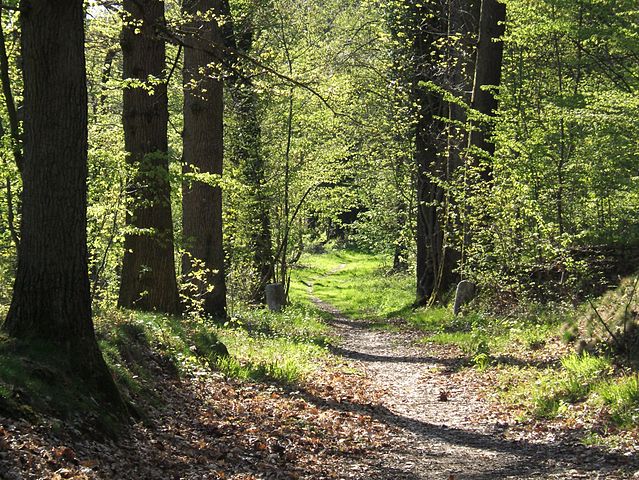
Image credit: Wikimedia Commons public domain, Forest path in Yvelines, France

Thursday, October 20, 2011

Creativity


Ken Robinson, in his February 2006 TED Talk (available here), challenges us to redesign education to nurture and support creativity. Here's some snapshots of his great talk. "Does School Kill Creativity?"

Children - Capacity for Innovation

"All kids have tremendous talents and we squander them, pretty ruthlessly."
"My contention is that creativity now is as important in education as literacy and we should treat it with the same status."

Creativity Requires the Space to Make Mistakes

“Kids will take a chance. If kids don't know, they will take a go, they aren't afraid of being wrong.”
"If you're not prepared to be wrong, you will never come up with anything original."

In our culture now, adults stigmatize mistakes. "We are educating people out of their creative capacities."

"We don't grow into creativity, we get educated out of it."

Imagine Shakespeare as a Child
We don't think of Shakespeare being a child. Ken lived near where Shakespeare's father lived.
“Shakespeare was in someone's English class. Imagine Shakespeare as a child. 'Go to bed now. Put the pencil down and stop speaking like that.'”

Against the Arts at the Bottom of the Hierarchy of Subjects, Critique of Industrial Education as Reproducing Lopsided and Disembodied Head-Focused Experience

Robinson argues against the current hierarchy of subjects. Reading Math, then Humanities, then the Arts. Within the arts, there's a hierarchy. art and music higher status drama, dance

"There's no school system that teaches dance everyday. We all have bodies, did I miss a meeting. As children grow up, we educate them progressively from the waist up, and then we focus on their heads, and slightly to one side. If we were to visit education as an alien and ask what is it for, you'd have to conclude the whole purpose of public education throughout the world is to produce university professors, they're the people who come out on the top. We should not hold them up as the high water mark of all human achievement, they are just another form of life. They live in their heads, up there and slightly to one side. They are disembodied. They look at their body as a form of transport for their heads. It's a way of getting their head to meetings."

"Our education system was ... to meet the needs of industrialism. Most useful subjects are at the top. Don't do music, you won't be a musician. Now profoundly mistaken. Second is, academic ability. academic intelligence. The whole system is a protracted entrance exam to university."

“In the next 30 years, more people will be graduating from education than any time in history. Suddenly, degrees aren't worth anything….Before, if you had a degree and if you didn't have a job, it's because you didn't want one.” Now you need a higher and higher one- whole structure changing.

Intelligence is Diverse, Dynamic, and Distinct
"We need to radically rethink our understanding of intelligence. .... It's diverse. Secondly, it's dynamic. Intelligence is wonderfully interactive. Creativity is the process of having original ideas that have value." It comes because of going across disciplines (13:50). "The third thing about intelligence is that it's distinct."

Dancer, not Deficient
Story about Dancer [now captured in his book, The Element (2009)], GIllian Lynne was sent to a specialist because the school suspected a learning disorder, when the doctor figured out, she was a dancer. "'Mrs. Lynne, Gillian isn't sick, she's a dancer.'" Gillian was able to attend dance school and eventually choreographed Cats and Phantom of the Opera.

A New Human Ecology Based on Building Human Capacity
"Al Gore spoke the other night about ecology and the revolution that was triggered by Rachel Carson. I believe our only hope for the future is to adopt a new conception of human ecology, one in which we start to reconstitute our understanding of human capacity. Our education system has mined our minds in the same way we've strip mined the Earth, for a particular commodity. And for the future, it won't serve us. We have to rethink the fundamental principles on which we're educating our children."

Need to Re-aim Education at Creativity to Change Human Planetary Presence for Healing/Generative Purposes
 "Jonas Salk...said, 'if all the insects were to disappear from the earth, within 50 years, all life on earth would end. If all human beings disappeared from the earth, all forms of life on earth would flourish.' And he's right."

Celebrating the Human Imagination
"What TED celebrates is the gift of the human imagination. We have to be careful now that we use this gift wisely and that we avert some of the scenarios we've heard about. The only way we'll do it is to see our creative capacities for the richness that they are and understand seeing our children for the hope that they are. And our task is to educate their whole being so that they can face this future. By the way, we might not see this future, but they will. And our job is to help them make something of it."

Sunday, October 11, 2009

Creativity and Connectedness -With Slices of Lemon and Guided by Beetle and Amaranth Blossom

I never studied latin, but I will never forget Mrs. Wolff in seventh grade teaching us poetry. We walk into class and she is slicing lemons. She invites us each to get settled in our chairs, and pay close attention. Then she has us each bite into a slice of lemon. A sudden ray of sun, a life-changing moment, an awakening. I will never be the same for that one slice of lemon.

I know this is going to sound so results oriented but I want my teaching to be elemental/alchemical when I'm "in the groove" - catalytic and activating: wings rise; sparks fly; empathy flows; wisdom deepens. So if I were assessing classroom experience, I would want to have a pulse on the direct embodied experience and the fruit of that experience for 'learners'/co-teachers. I wish we had a wow-o-meter that could measure the wow-waves when classes are amazing, synergistic, autopoietic. Then another question for me is what happens with the wow? Can we sustain it? Is some of it subtle and synchronistic (how do we optimize for subtle and synchronistic, guided by beetle and amaranth blossom as much as human mentation or design)-- Is that a longitudinal study? Is that about a way of measuring ecological (relational) richness? The more things it sparks, the better?

As in creativity theory, this might be a new thing related to the quality of elaboration and originality; amongst the main four - according to some-: fluidity, flexibility, elaboration, and originality. Or is it a different factor to assess for; there is definitely a tension between originality sourced in divergence and (innovation) and creativity which connnects. Perhaps there is a form of creativity which has been undervalued in innovation-addicted scientific reaserch on creativity, which perhaps would be a form of originality that would also favor connectedness and relationship instead of difference. It's possible what we need to cultivate now is ecological creativity that connects us to larger cycles and flows of Earth wisdom. Instead of a creativity of divergence and difference, a proliferating profusion of connection, biomimetic, pulsing, alive.

Tuesday, September 29, 2009

Earth Creativity and Regenerativity

One thing is that I do not actually think creativity (or intelligence) is a uniquely human activity. In fact I suspect that creativity and engaging in our natural/native/inbuilt capacity for creativity brings us into more alignment with the larger earth-being and other cells/organelles/organs of the earthbodysystementityaliveness. I believe creativity activates earth-wisdom capacity inside of us, and also allows us to become more connected with other earth-beings, both those in human bodies and in other bodies (rock embodiments, peregrine falcon bodies, etc.) if you will [but somehow, while saying this, acknowledging and weighting that we are all part of one thing instead of thinking of ourselves as separate beings--more feats yet to develop with the English language to express this]. Another way I might explore thinking about this, a la John Seed/Joanna Macy in Thinking Like a Mountain and more, in their evolution walk and Council of All Beings (has anyone done these?), is to discover how creativity activates our genetic and epigenetic knowledge of all Earth beings, our deeper wisdom, which we already carry within us, in the very fiber of our beings.

Moving from this place of connection/kin-action, deeply sourced across the entire wisdom of earth's profuse creativity-creation, my consciousness moves from an entirely different place. I am able to hyperdeepenleap into deeptime, creationthought, deepresence, generativeunfoldment, ____(words yet to come)_____.

I would locate the sense of source point or "pinnacle" (hierarchical construct) for knowledge not in some futurity or even current state of prime evolutionary edge (which metacognitively represents a manifest destiny of knowledge if you will), but rather that knowledge and wisdom, sourced at the very epicenter of creation (a la the new cosmologists' great unfurling/big bang or the sense of timelessness in Macy's deep time) is embodied in everything that has matter and energy unfurling. This is very different than the we-know-more-as-we-go sense of progress of the condition of human cultures (for the past 5,000 years) and more greatly resembles earlier 35,000+ years of amicable human-group-nature matrixed living. So there is a deep sense of mystery, depth, sourcing, kinship/activation as part of larger weaves of earthlife, creativity-as-aliveness, regenerativity as a native capacity of all living things that I'd like to explore and energize/catalyze/awaken.