Dr. Hauk collaborated with three other scholars to generate a briefing paper and slide presentation as part of the 14th Annual Research Symposium of the North American Association of Environmental Education on the topic of "Land and Place as Principal Investigator: Turning the Research Spiral." As a deepening of applying Gaian methods in research, this work explores the rich intersection of converging movements to invert human-centered research approaches. Co-authors included Mandy Leetch, Mandisa Wood, and Rachel Kippen.
The abstract:
Imagine a future in which land and place increasingly serve as co-researchers or principal investigators in environmental and sustainability education research. Land-based pedagogy, critical place inquiry, indigenous knowledge systems and indigenous ways of knowing, feminist materialisms, bioculturally responsive curriculum development, nature as teacher, terrapsychology, living systems ethical research considerations, and Gaian methods converge. These slides and briefing paper help explore questions of consent, data-gathering, authorship, and ethics through experiential, collaborative dialogue with examples, paradigms, and methods. Participants walk away with knowledge of effective practice and a resource bibliography to continue to innovate away from anthropocentric assumptions in environmental and sustainability education and towards more inclusive paradigms, methodologies, lenses, and frames for higher quality research.
The slides are available on Slideshare.
The briefing paper is available online as a google doc.
Ideas, actions, examples, reflections on regenerating the earth. A formative period for the Institute for Earth Regenerative Studies.
Showing posts with label research. Show all posts
Thursday, January 4, 2018
Tuesday, July 23, 2013
Complexity Conference to Include Everyday Creativity Scholar Ruth Richards
Saybrook creativity professor Ruth Richards will be the Friday keynote at the Society for Chaos Theory in Psychology and the Life Sciences 23rd Annual International Conference this July 25-27 at Portland State University.
Program available here:
http://www.societyforchaostheory.org/conf/2013/
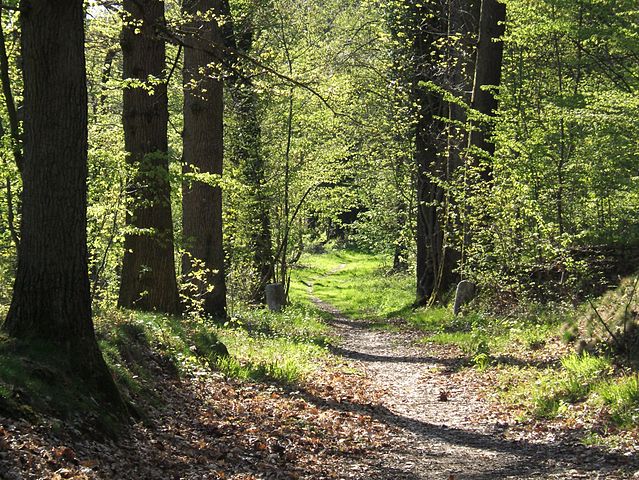
An excerpt from Everyday Creativity highlights how we can miss the stunning beauty all around us.
We create the sight even as we become conscious of it. We do not simply see it. In our daily lives, who or what is doing the selecting? And why? Is this predetermined? Can we -- in the here and now – make a change? Can we see further? Can we see better? Can we even better our world? - Ruth RichardsRuth Richards has also studied fractals and creativity as well as her research on everyday creativity. David Schuldberg, who is also active in everyday creativity and whose chaos-psychology contributions include "vortices of thought"will also be speaking at the upcoming conference.
A few citations for the curious:
- Richards, Ruth. (2001a). A new aesthetic for environmental awareness: Chaos theory, the beauty of nature, and our broader humanistic identity. Journal of Humanistic Psychology, 41, 2, 59-95.
- Richards, Ruth. (2001b). Millennium as opportunity: Chaos, creativity, and Guilford's Structure of Intellect model. Creativity Research Journal, 13(3/4), 249-265.
- Richards, Ruth. (2010). Everyday creativity in the classroom. In Ronald A. Beghetto & James C. Kaufman, Eds., Nurturing creativity in the classroom (pp. 206-234). UK: Cambridge University Press.
- Richards, Ruth. (Ed.). (2007). Everyday creativity and the new views of human nature: Psychological, social, and spiritual perspectives. Washington DC: American Psychological Association.
Image credit: Wikimedia Commons public domain, Forest path in Yvelines, France
Labels:
complexity,
conference,
creativity,
fractals,
research
Friday, March 30, 2012
Earth Dreaming Research
| Mariko Mori, "Dream Temple," photo by R. Learoyd |
One recent initiative hypothesizes that certain kinds of dreams might represent "earth dreams" and constitute expressions of the earth system through humans. This is an extension of the concept of earth empathy, in which the planetary system and wisdom comes alive through human ways of knowing and being. As part of the research work of the Institute, this earth dreaming research is conducting mixed methods research with a cohort of dreamers who are incubating earth dreams. If you have what you believe to be "earth dreams" or encounter them in your readings or life experience, please contact earthdreamingresearch AT gmail DOT com. It might be that your earth dream could be considered as data for this research project in its initial or a future phase. We will post occasional information and ideas pertaining to these topics via this blog.
Image credit: Mariko Mori, "Dream Temple," photo by R. Learoyd From http://www.hubculture.com/groups/47/news/102/
Wednesday, September 23, 2009
Co-evolutionary Inquiry
My friend Richard Pritzlaff of the Biophilia Foundation says:
"As such, there is need for data and knowledge to help create the movement toward a new paradigm of coevolving sustainable human and Earth systems. It has also become obvious to me that this need and moment have come because of the false pretense of positivism; while perhaps the human world has become longer (in terms of the length of a life) and more comfortable for some, the human world has not become better in terms of depth and satisfaction within the life journey for all but a few. Meanwhile, the toll on the Earth system from creating these material benefits now threatens all of us in the most fundamental ways."
I suggest:
I appreciate the model of co-evolution. One of my favorite historical co-evolution examples is angiosperms/flowering plants and pollinators. I appreciate the beauty and synergy of this form of "extreme mutualism." Perhaps there are forms of ecological inquiry? Where we are not only acting (upon) or changing things (action research), but where we are actively co-evolving, co-learning with the participant-teachers and the autopoietic, vibrant processes we together generate? Where we design to enhance feedback loops instead of trying to remove them? Where we attempt to develop/design research as nature designs itself: stacking and stocking functions within the research...generating new living possibilities? What would that kind of research look like? Our work might particularly lend itself to seeing (and co-generating) the "evolution"/unfurling of complexity and life-generating mutualisms....
"As such, there is need for data and knowledge to help create the movement toward a new paradigm of coevolving sustainable human and Earth systems. It has also become obvious to me that this need and moment have come because of the false pretense of positivism; while perhaps the human world has become longer (in terms of the length of a life) and more comfortable for some, the human world has not become better in terms of depth and satisfaction within the life journey for all but a few. Meanwhile, the toll on the Earth system from creating these material benefits now threatens all of us in the most fundamental ways."
I suggest:
I appreciate the model of co-evolution. One of my favorite historical co-evolution examples is angiosperms/flowering plants and pollinators. I appreciate the beauty and synergy of this form of "extreme mutualism." Perhaps there are forms of ecological inquiry? Where we are not only acting (upon) or changing things (action research), but where we are actively co-evolving, co-learning with the participant-teachers and the autopoietic, vibrant processes we together generate? Where we design to enhance feedback loops instead of trying to remove them? Where we attempt to develop/design research as nature designs itself: stacking and stocking functions within the research...generating new living possibilities? What would that kind of research look like? Our work might particularly lend itself to seeing (and co-generating) the "evolution"/unfurling of complexity and life-generating mutualisms....
Labels:
autopoiesis,
autopoietic,
co-evolution,
complexity,
living,
methods,
mutualism,
research,
vibrance
Subscribe to:
Posts (Atom)